San Diego isn’t exactly famous for brutal winters.
Depending on where you live in the county, your furnace might sit unused for months at a time. You may turn it on for the first chilly night of the season, use it occasionally through winter, and barely think about it compared with your air conditioner.
So do you really need an annual furnace tune-up in San Diego?
For most furnaces, regular professional maintenance still makes sense—even in our mild climate. In fact, ENERGY STAR recommends annual pre-season checkups for heating and cooling equipment, and the U.S. Consumer Product Safety Commission recommends yearly professional inspection of fuel-burning heating systems.
But the reason isn’t simply that your furnace needs to be cleaned every 12 months.
A furnace tune-up is an opportunity to check whether a system that may have been sitting idle is starting, heating, venting, and shutting down properly—and, with a gas furnace, whether important combustion and safety components are operating as they should.
Here’s what San Diego homeowners should know before deciding whether to schedule one.
Quick Answer: Do Furnaces Need Annual Maintenance in San Diego?
Yes, annual professional heating-system maintenance is generally recommended even in San Diego.
ENERGY STAR recommends having a contractor perform an annual pre-season heating-system checkup, ideally in the fall. For fuel-burning heating systems, the U.S. Consumer Product Safety Commission also recommends professional inspection every year.
Why bother when you barely use your heat?
A furnace tune-up can:
- Check whether the system starts, operates, and shuts down properly
- Inspect important electrical and safety controls
- Check airflow and the filter
- Identify wear or developing problems
- For gas furnaces, inspect combustion-related components and the heat exchanger
- Give you a chance to address problems before the first cold night you actually need heat
San Diego’s mild winters may mean fewer furnace run hours. They don’t eliminate the need to make sure the equipment operates properly when you do use it.
Why Tune Up a Furnace You Barely Use?
It’s a reasonable question.
If you lived somewhere that ran furnaces around the clock for months, annual heating maintenance might seem obvious.
San Diego is different.
Many local homeowners rely far more heavily on their cooling systems than their furnaces. Heating equipment can remain off for long stretches before temperatures finally drop enough to turn it on again.
But low use isn’t the same thing as no maintenance need.
During the months a furnace sits idle:
- Dust and debris can accumulate
- Electrical connections and components can still age
- Filters can become dirty from shared HVAC operation
- A previously minor issue can remain unnoticed
- Venting or combustion problems may not become obvious until the furnace runs again
And once the thermostat finally calls for heat, you want the system to start and operate normally—not discover a problem on the first cold evening of the year.
That’s why pre-season maintenance makes sense even in a mild climate.
What Does a Furnace Tune-Up Actually Check?
A furnace tune-up should be more than turning the thermostat up and confirming that warm air comes from the vents.
The exact procedures depend on the furnace and manufacturer, but professional heating maintenance can include checking:
- Thermostat operation
- Electrical connections
- System controls
- Starting and shutdown cycles
- Air filter condition
- Blower and airflow
- Moving components where applicable
- Furnace cleanliness
- Safety controls
For fuel-burning furnaces, additional inspection is particularly important.
ENERGY STAR’s heating-maintenance checklist calls for checking:
- Gas or oil connections
- Gas pressure
- Burner combustion
- The heat exchanger
ENERGY STAR notes that improper fuel connections can create a fire hazard and that dirty burners or a cracked heat exchanger can cause improper burner operation.
The point isn’t to assume something is wrong with your furnace.
It’s to verify how the system is actually operating.
Is a Furnace Tune-Up Mostly About Energy Efficiency?
No.
Efficiency is one reason to maintain HVAC equipment, but it shouldn’t be the entire conversation—particularly for San Diego homeowners who don’t run their furnaces constantly.
Maintenance is also about:
Reliability
Does the furnace actually start when the thermostat calls for heat?
Does it complete a normal heating cycle?
Does it repeatedly start and stop?
Are there components showing signs of wear?
Airflow
A dirty filter or airflow problem can make the system work harder and affect comfort.
SDG&E recommends checking a forced-air furnace filter monthly during the heating season and cleaning or replacing it as needed.
System Operation
ENERGY STAR recommends checking the starting cycle to verify that heating equipment starts, operates, and shuts off properly.
Safety
For a gas furnace, combustion, gas connections, venting, and the heat exchanger introduce considerations that simply don’t apply to every electrical appliance in your home.
That’s one reason professional furnace maintenance is different from simply replacing the filter yourself.
Gas Furnace? Safety Is an Important Part of the Answer
If your San Diego home has a natural-gas furnace, annual maintenance has an additional purpose.
Fuel-burning heating equipment can produce carbon monoxide if something goes wrong with combustion or venting.
Carbon monoxide is colorless and odorless, which means you cannot rely on smell to determine whether it is present.
The U.S. Consumer Product Safety Commission recommends having fuel-burning heating systems professionally inspected each year and says an inspection should include relevant chimneys, flues, and vents.
ENERGY STAR likewise recommends checking gas connections, gas pressure, burner combustion, and the heat exchanger during heating maintenance.
That doesn’t mean an unmaintained furnace is automatically unsafe.
It means safety-related components and combustion performance are legitimate reasons for periodic professional inspection even when the furnace doesn’t accumulate heavy annual run time.
What About an Electric Furnace?
An electric furnace doesn’t burn natural gas, so combustion and carbon-monoxide concerns associated with a gas furnace don’t apply to the equipment in the same way.
But an electric furnace is still an HVAC system with:
- Electrical components
- Heating elements
- Controls
- A blower
- Airflow requirements
- Filters
- Safety devices
So maintenance still has value.
The inspection simply isn’t identical to the one performed on a gas furnace.
This is one reason generic furnace-maintenance checklists can be misleading: what should be inspected depends on what type of heating system you actually have.
What If You Have a Heat Pump Instead of a Furnace?
Not every San Diego home heats with a furnace.
If you have a heat pump, your maintenance needs are different because the same system typically provides both heating and cooling.
That also means a heat pump may operate during considerably more of the year than a furnace that’s only used during occasional cold weather.
Don’t schedule a “furnace tune-up” if you don’t actually have a furnace.
Tell the HVAC company what type of system you have—or, if you aren’t sure, ask them to identify it.
Elite Heating & Air Conditioning Services works on both furnaces and heat pumps throughout San Diego County.
Does San Diego’s Climate Change How You Should Think About Furnace Maintenance?
Yes—but perhaps not in the way you’d expect.
A homeowner in a colder climate may think about furnace maintenance in terms of heavy seasonal use.
For many San Diego homeowners, a better way to think about it is readiness after long periods of limited use.
Your furnace may spend much of the year waiting.
Then one cold evening, you expect it to work immediately.
A pre-season check gives you an opportunity to find a problem before that moment.
There’s also considerable climate variation within San Diego County. A coastal household that rarely uses its furnace may have a very different heating pattern from a home farther inland.
The maintenance recommendation doesn’t need to be based on pretending every San Diego homeowner uses heat the same way.
When Is the Best Time for a Furnace Tune-Up in San Diego?
Fall is usually the ideal time.
ENERGY STAR recommends checking heating equipment in the fall, before contractors become busier during winter.
For San Diego homeowners, there’s another practical advantage:
You can test and service the furnace before you urgently need it.
If a technician finds a worn component or another issue, you have time to consider the recommendation instead of making a decision while your house is cold.
That said, if you missed the fall window, you don’t need to wait another year.
A furnace can be inspected at other times of year.
What Can You Check Yourself Before Heating Season?
You don’t need a technician for every basic furnace check.
Before the first cold weather, homeowners can:
- Check or replace the HVAC filter as appropriate
- Make sure supply and return vents aren’t blocked
- Keep the area around the furnace clear
- Check that the thermostat is set correctly
- Make sure your carbon monoxide alarms are working if your home has fuel-burning equipment
- Pay attention when the furnace runs for the first time
SDG&E recommends checking forced-air furnace filters monthly during periods of furnace use and keeping the furnace area free of dust, lint, and airflow obstructions.
These homeowner checks complement professional maintenance rather than replacing the parts of an inspection that require HVAC training and test equipment.
What Should You Pay Attention to the First Time You Turn the Furnace On?
After months without heat, don’t just turn the thermostat up and walk away.
Pay attention to how the system behaves.
Ask:
- Does the furnace start normally?
- Is warm air coming from the supply vents?
- Does airflow seem normal?
- Does the house begin warming?
- Does the furnace repeatedly start and stop?
- Are there unusual noises?
- Is there an unusual persistent odor?
- Does the thermostat behave normally?
- Does the system shut down unexpectedly?
Some temporary odor from accumulated dust may occur when heating equipment is first used after sitting idle.
But persistent burning, electrical, or gas-like odors should not simply be written off as “first-use furnace smell.”
If something seems abnormal, turn the system off when appropriate and have it evaluated.
When Should You Skip the Tune-Up and Call for Furnace Repair Instead?
A tune-up is preventive maintenance.
It isn’t a substitute for diagnosing an existing problem.
Schedule heating repair rather than simply requesting routine maintenance if your furnace:
- Won’t turn on
- Blows cool air when it should be heating
- Starts and stops repeatedly
- Makes grinding, banging, screeching, or other abnormal noises
- Produces an unusual persistent odor
- Trips a breaker repeatedly
- Doesn’t heat the home normally
- Shows an error or fault code
- Has visible damage
- Has another obvious operational problem
Tell the HVAC company what’s happening when you schedule the appointment so they know you’re experiencing a malfunction rather than simply requesting seasonal maintenance.
What About That Burning Smell the First Time You Turn On the Heat?
This is one of the most useful distinctions for San Diego homeowners because a furnace can sit unused for months.
A temporary dusty odor can occur when heating equipment is first operated after a long period of inactivity.
But don’t use that explanation to dismiss every furnace odor.
Turn the system off and seek professional help if you notice:
- A persistent electrical or burning odor
- Smoke
- Visible scorching
- Repeated breaker trips
- A gas-like odor
- A carbon monoxide alarm
- Other signs of an electrical, combustion, or equipment problem
If a carbon monoxide alarm sounds, don’t troubleshoot the furnace yourself. Leave the home for fresh air and follow emergency guidance.
Carbon monoxide itself has no smell, so an absence of odor does not establish that a fuel-burning furnace is operating safely.
Do You Need a Furnace Tune-Up Every Single Year?
Major safety and efficiency organizations recommend annual professional heating-system maintenance.
ENERGY STAR recommends annual pre-season heating and cooling checkups. The CPSC recommends yearly professional inspection of fuel-burning heating systems.
That provides a useful general schedule.
But the exact service requirements for your equipment can also depend on:
- Furnace type
- Manufacturer instructions
- System age
- Warranty requirements
- Equipment condition
- Previous repair history
- How the system is installed and used
Your furnace owner’s manual and warranty terms are worth checking rather than relying on a generic internet maintenance schedule.
If a manufacturer specifies a particular maintenance interval or procedure, follow the requirements for your equipment.
Does a New Furnace Still Need Maintenance?
Yes.
“New” and “maintenance-free” aren’t the same thing.
A newer furnace may be less likely to have age-related failures, but maintenance also verifies system operation, controls, airflow, electrical connections, and—in fuel-burning equipment—combustion-related components.
There’s another reason to check the paperwork:
HVAC warranty requirements vary.
Don’t assume maintenance is—or isn’t—required to preserve your particular warranty. Review the manufacturer’s warranty and installation documentation for your furnace.
That’s more accurate than making a blanket claim that every HVAC warranty requires annual maintenance.
Can Furnace Maintenance Prevent Every Breakdown?
No.
A furnace can be maintained properly and still have a component fail.
A tune-up isn’t a guarantee that nothing will break during the winter.
The value of maintenance is that it creates an opportunity to:
- Verify normal operation
- Identify visible wear or abnormal readings
- Correct appropriate maintenance issues
- Find some developing problems before they become failures
- Establish the condition of the equipment before heating season
That’s a much more realistic reason to maintain a furnace than promising “no breakdowns.”
Is a Furnace Tune-Up Worth It If You Plan to Replace the System Soon?
That depends on the situation.
If your furnace is already scheduled for replacement in the immediate future, routine maintenance on equipment that’s about to be removed may offer limited value.
But if you’re merely wondering whether an older furnace might need replacement, don’t assume age alone answers the question.
An inspection can provide information about:
- Current operation
- Existing problems
- Equipment condition
- Repair needs
- Safety concerns
- Whether continued operation is reasonable
Elite Heating & Air Conditioning Services also provides free second opinions, which can be useful if you’ve already been told you need an expensive furnace repair or replacement and want another assessment before deciding.
Elite Technician Insight
Ask an Elite technician:
Q: “What’s something you commonly find during San Diego furnace tune-ups that surprises homeowners because they don’t use their heat very often?”
A: “Here’s one we see all the time: a furnace that hasn’t run in a year or two, but the homeowner swears it’s fine. That was the case at a recent tune-up in Clairemont. It turned on and blew warm air last time, so they figured they were good to go.
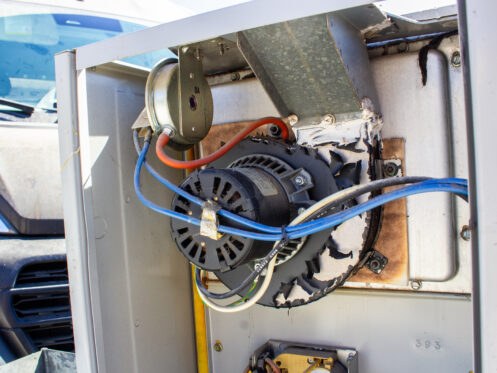
Once we ran it through a full heating cycle, the burners lit and then shut off after a couple of minutes, over and over. The culprit? A flame sensor coated in dust and oxidation. The burners also had surface rust from our coastal air, and the filter was long overdue.
Nothing dangerous, but it was headed for a no-heat call on the first cold night. We cleaned everything up, swapped the filter, and ran a carbon monoxide test to make sure it was safe. Bottom line: if your heating system mostly sits, have it checked before you need it.” -Bryan L.
What Does Elite Check During Heating Service?
The exact work depends on the equipment and type of appointment.
Elite Heating & Air Conditioning Services’ heating-service process includes system and safety checks, diagnostic testing, airflow evaluation, appropriate cleaning and adjustments, and final operation verification.
Elite’s current heating-service information describes checking items such as:
- Furnace safety and system operation
- Venting
- Voltage and amperage
- Gas pressure where applicable
- Temperature rise
- Error codes
- Filter and blower condition
- Electrical connections
- Burners
- Thermostat operation
The appropriate checks vary by system, which is another reason a tune-up should be based on the actual equipment in the home rather than a one-size-fits-all checklist.
Furnace Tune-Up FAQs
Do furnaces really need annual maintenance in San Diego?
Annual pre-season heating maintenance is recommended by ENERGY STAR, and the CPSC recommends yearly professional inspections for fuel-burning heating systems. San Diego’s mild climate may reduce how often some furnaces run, but it doesn’t eliminate the value of checking operation and safety before heating season.
When should I schedule a furnace tune-up in San Diego?
Fall is a good time because the furnace can be inspected before colder weather arrives. ENERGY STAR specifically recommends fall heating-system checkups.
What happens during a furnace tune-up?
The exact work depends on the furnace. Maintenance generally involves checking system operation, controls, electrical components, airflow, filters, and safety devices. Gas-furnace maintenance also involves combustion-related components such as burners, gas pressure, connections, and the heat exchanger.
Does a gas furnace need more safety checks than an electric furnace?
A gas furnace has combustion and fuel-related components that an electric furnace doesn’t have, so some inspection procedures differ. Gas furnaces require attention to combustion, fuel connections, the heat exchanger, and appropriate venting.
Do I need a furnace tune-up if I barely use the furnace?
Limited use doesn’t necessarily eliminate the need for inspection. The system can sit unused for months before being expected to operate normally. Annual professional heating-system maintenance remains the general recommendation.
Should I tune up my furnace or call for repair?
If the furnace appears to operate normally and you’re preparing for heating season, maintenance may be appropriate. If it won’t start, isn’t heating properly, short cycles, produces abnormal noises or odors, repeatedly trips a breaker, or otherwise malfunctions, tell the HVAC company you’re experiencing a repair problem.
Is changing the furnace filter the same as a tune-up?
No. Checking or replacing the filter is an important homeowner maintenance task, but professional maintenance can include system controls, electrical components, operating cycles, airflow, and—in a gas furnace—combustion and safety-related checks.
What if I have a heat pump instead of a furnace?
A heat pump has different equipment and maintenance requirements. Because it can provide both heating and cooling, it may operate during much more of the year. Tell the HVAC company that you have a heat pump when scheduling maintenance.
Does Elite provide furnace tune-ups in San Diego County?
Yes. Elite Heating & Air Conditioning Services provides heating maintenance and furnace service throughout San Diego County and services all brands of heating and cooling equipment.
Before Heating Season: 60-Second Furnace Check
Before turning on your furnace for the season:
☐ Check the HVAC filter
☐ Make sure supply and return vents aren’t blocked
☐ Clear clutter away from the furnace
☐ Check the thermostat settings
☐ Make sure carbon monoxide alarms are operational if you have fuel-burning equipment
☐ Turn on the heat and observe whether the furnace starts normally
☐ Check for normal airflow from several supply vents
☐ Listen for unusual noises
☐ Pay attention to persistent unusual odors
☐ Make sure the home begins warming normally
If the furnace doesn’t operate normally, don’t wait for a colder night to find out why.
So, Do You Really Need That Furnace Tune-Up?
Living in San Diego changes how you use your furnace.
It doesn’t change what the furnace is.
A gas furnace is still fuel-burning equipment with burners, controls, a heat exchanger, venting, electrical components, a blower, and safety devices. An electric furnace still relies on electrical components, controls, airflow, and safety systems.
And either one may sit unused for months before you’re suddenly counting on it.
So instead of thinking about furnace maintenance as something only homeowners in snowy climates need, think of it as a pre-season check that your heating system is ready to operate properly when San Diego finally gets cold enough to use it.
Haven’t Checked Your Furnace Yet?
Elite Heating & Air Conditioning Services provides furnace maintenance, heating repair, and heating-system diagnostics throughout San Diego County.
Whether your furnace hasn’t run since last winter or you’ve noticed something unusual when you turned it on, Elite can inspect the system and explain what it actually needs.
Elite also offers a maintenance program with biannual AC and furnace checkups, giving homeowners a way to keep both sides of their HVAC system on a regular maintenance schedule.
And if you’re facing a heating problem that can’t safely wait, Elite provides 24/7 emergency HVAC service throughout San Diego County.
Contact Elite Heating & Air Conditioning Services to schedule your furnace service before the next cold night.